In brief
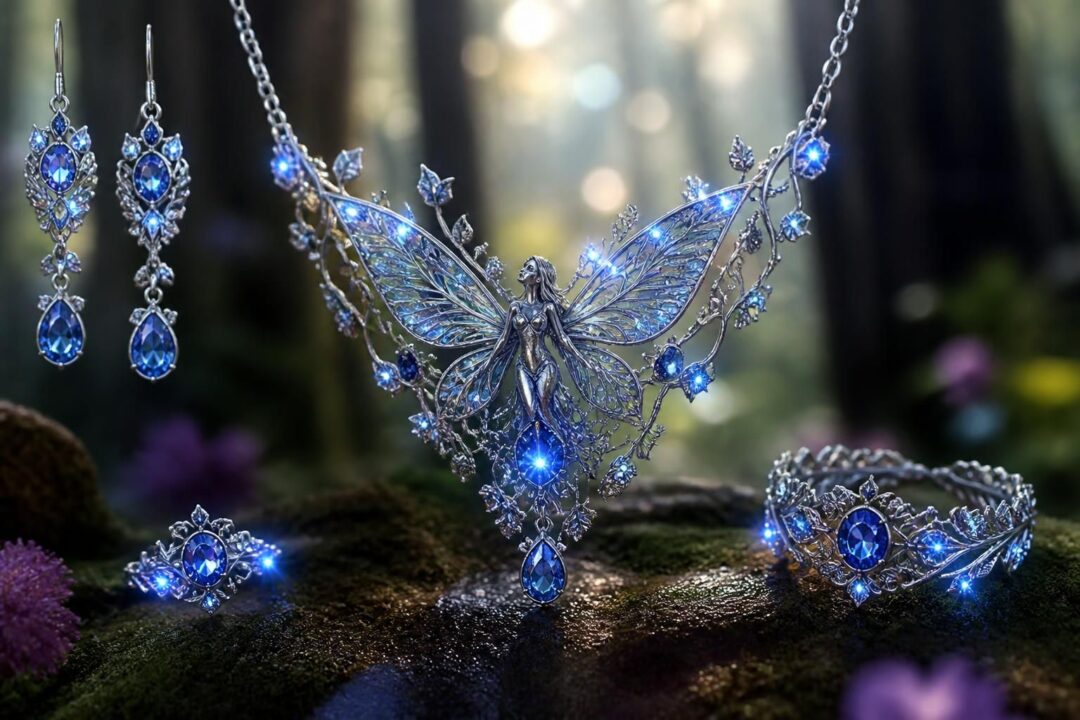
- Blue Fairy Necklace aesthetics blend vintage storybook cues with modern Pop Culture styling and collectible logic.
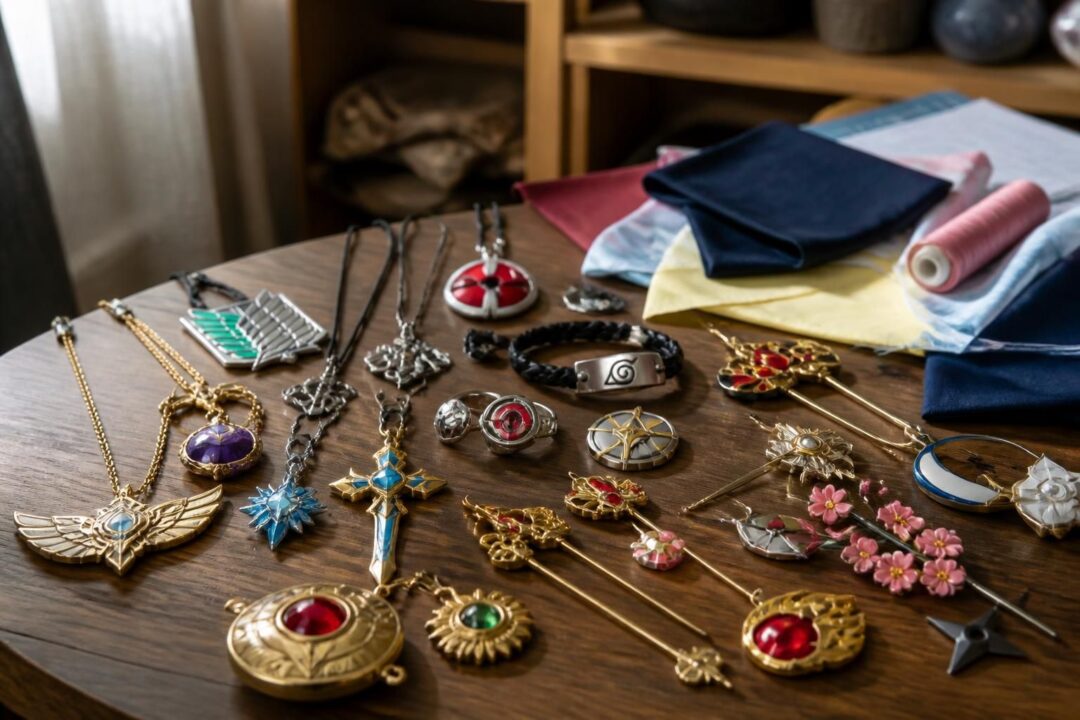
- Fairy Jewelry travels across film, games, anime, and fandom fashion, often signaling “hope,” “transformation,” or “hidden power.”
- Magical Jewelry design relies on readable symbols: wings, droplets, stars, moons, florals, and luminous blue stones.
- Fans now treat Fantasy Accessories like wearable merch, mixing cosplay precision with everyday outfits.
- Material choices matter: plated metals, sterling silver, crystal, enamel, and lab-grown gems shape both price and durability.
- Collectors track drops, limited runs, and creator collabs; therefore, provenance and care practices affect resale value.
Fairy imagery has always sold a promise: wonder that fits in the palm of a hand. Today, that promise often arrives as an Enchanting Necklace in luminous blues, a winged pendant, or a star-sparked charm that feels borrowed from a favorite scene. Moreover, the “blue fairy” idea carries a specific emotional charge in the modern Fairy Tale vocabulary—guidance, courage, and the moment when the impossible becomes real. That is why the Blue Fairy Necklace has become a steady reference point in Pop Culture styling, from red-carpet fantasy looks to subtle office-friendly pendants that still read as mythic if you know what to look for.
At the same time, Fairy Inspiration now travels faster than any single franchise. Game launches, streaming hits, and creator-led jewelry brands push fairy motifs into everyday wardrobes. Consequently, the line between “costume” and “collection” keeps getting thinner. A single piece of Magical Jewelry can function as a narrative token, a fandom signal, and a design object with real craft behind it. The result feels less like escapism and more like identity: a personal story told through Whimsical Design, a flash of blue light, and a touch of Mystical Charm.
Blue Fairy Necklace as a Pop Culture symbol: from storybook icon to wearable reference
Few motifs communicate “magic is arriving” as clearly as a blue fairy silhouette. However, the Blue Fairy Necklace works not only because it looks pretty, but because it reads like a shortcut to meaning. Blue implies clarity and protection, while fairy wings suggest mobility and transformation. Therefore, even a minimalist pendant can feel narrative-rich without needing extra context.
In modern Pop Culture, fairy-coded jewelry often appears during character turning points. A hero receives a charm before a quest. A side character reveals a hidden lineage through a locket. Likewise, many games use jewelry as “equipable lore,” letting players wear a token that boosts stats while also anchoring the world’s mythology. That double function mirrors why fans buy Fantasy Accessories: they want beauty, yet they also want story.
Why “blue” keeps winning in Fairy Tale styling
Blue reads clean on camera, which matters in an era of short-form clips and high-contrast color grading. Moreover, blue stones—crystal, sapphire-toned glass, or lab-grown gems—throw light in a way that feels “spell-like.” As a result, designers keep returning to icy blues, deep cobalt, and opalescent aquas when they want instant enchantment.
Blue also bridges genres. It looks at home in classic Fairy Tale imagery, yet it also fits sci-fantasy settings. Consequently, a wing pendant with a blue teardrop can match a cottagecore dress or a sleek cyber-fantasy jacket. That versatility helps explain why the motif stays in circulation across fandoms.
A collector’s case study: the “Lumi Arc” pendant as a narrative prop
Consider a hypothetical collectible line often discussed in fan communities: the “Lumi Arc” pendant, a small wing frame holding a blue “mana drop” crystal. It gets marketed as Magical Jewelry inspired by “the moment a guide appears.” Even though the story is generic, it still feels familiar. Therefore, buyers map it onto their favorite scenes from animation, JRPGs, or urban fantasy TV.
That mapping creates value beyond materials. If a pendant arrives with a lore card, a numbered run, or a creator signature, it becomes a micro-collectible. Furthermore, owners tend to photograph it in “prop style,” placing it on spellbooks, controllers, or art prints. The insight is simple: Fairy Jewelry now functions like a portable memory of a fictional world.
The next step is seeing how designers build that memory into form, color, and hardware choices.
Fairy Jewelry design language: materials, motifs, and Whimsical Design that still feels wearable
Great Fairy Jewelry balances two impulses. On one hand, it must signal fantasy fast. On the other hand, it must survive daily wear, from subway commutes to convention floors. Therefore, the best pieces combine readable motifs with practical construction: secure bails, smooth edges, and finishes that do not snag knits.
Motifs tend to cluster into a few “visual verbs.” Wings communicate uplift. Vines suggest nature’s agency. Stars and moons imply destiny and night magic. In addition, teardrops and droplets imply bottled power, like a potion captured mid-splash. These cues allow a designer to build an Enchanting Necklace even at small scale.
Material choices that shape comfort and longevity
Plated brass offers affordability and bold shapes, yet plating wears with friction. Consequently, collectors who wear pieces often prefer sterling silver for resilience and easy polishing. Gold vermeil can look premium, although it still needs gentle handling. Likewise, stainless steel brings toughness, but it can look too modern unless the silhouette stays ornate.
Stone selection matters just as much. Crystal and glass deliver sparkle at accessible prices. However, lab-grown gems and high-grade cubic zirconia offer cleaner brilliance for close-up photography. Opalite and moonstone-style materials read “otherworldly,” especially under warm lighting. The key insight is that “magical” often means “light-reactive,” not necessarily expensive.
What makes a Whimsical Design feel “adult” rather than costume
Scale and finishing decide the line. Oversized wings and glitter enamel can look playful, yet they risk cosplay-only vibes. Meanwhile, smaller pendants with crisp metalwork feel like fine accessories. Therefore, many brands use a restrained silhouette and let color do the fantasy work.
Hardware also signals quality. A well-weighted chain drapes better and tangles less. Moreover, an adjustable extender supports layering, which is central to modern styling. If a clasp feels secure, the wearer relaxes. That comfort allows the Mystical Charm to feel natural in everyday life.
Motif toolkit for Fairy Inspiration
Designers pull from a shared library of shapes, which helps pieces feel familiar across fandoms. For instance, a wing frame plus a blue drop reads “guide fairy” even without explicit branding. Likewise, a tiny bell charm can nod to folklore without copying any one property. As a result, the market supports both official merch and “inspired-by” artisan work.
| Design element | Common visual cue | Pop Culture use-case | Wearability tip |
|---|---|---|---|
| Wing filigree | Guidance, uplift | Mentor characters, “awakening” scenes | Choose rounded edges to avoid snags |
| Blue teardrop stone | Bottled magic, purity | Quest items, save-point symbolism | Opt for bezel settings for durability |
| Moon and star accents | Fate, night spells | Witch-fairy crossovers, cosmic fantasy | Keep accents small for daily outfits |
| Floral vines | Forest power, growth | Cottagecore fantasy, druid aesthetics | Look for solid links to prevent bending |
| Pearl-like luster | Oceanic or ethereal aura | Mer-fairy hybrids, dream sequences | Avoid perfumes directly on the surface |
Once the design language feels clear, the next question becomes where it shows up most loudly: screens, stages, and fandom wardrobes.
Fairy Tale aesthetics in Pop Culture: film, games, anime, and the rise of wearable lore
Pop Culture loves fairy codes because they scale. A blockbuster can push elaborate wings and glowing stones. Meanwhile, a streaming drama can hint at the same myth with a single pendant. Consequently, viewers learn to read jewelry as a narrative device, not just decoration.
Animation also trains the eye. Stylized highlights make gems look like they contain light. Therefore, real-world Magical Jewelry often imitates animated rendering through aurora crystals, iridescent coatings, and reflective foils. Even subtle pieces borrow those cues, because fans recognize them instantly.
Video games and the “equipable accessory” mindset
Games have normalized the idea that accessories carry power. A necklace might boost healing, unlock dialogue, or mark faction membership. Moreover, loot systems taught players to compare rarity, rolls, and set bonuses. That logic now influences buying behavior: limited drops feel like “rare items,” while collabs feel like “event gear.”
That mindset helps explain why an Enchanting Necklace can sell out within minutes. The purchase feels like claiming a trophy. In addition, collectors track variants, such as “midnight blue” versus “aqua glow.” Those tiny shifts mimic how games reward completionists.
Film and TV: jewelry as emotional shorthand
On screen, a fairy-coded necklace often marks a promise. It can symbolize protection, a pact, or a coming-of-age step. However, modern scripts often flip the trope. A delicate charm may hide danger, or it may reveal a character’s manipulation. That twist keeps fairy imagery from feeling too sweet.
Costume departments also use jewelry to build continuity. A recurring pendant helps viewers track a character across outfits and timelines. Therefore, replica and inspired pieces sell because they anchor memory. Wearing the piece becomes a way to carry the scene into daily life.
Fan fashion: from convention cosplay to “desk-ready” Fantasy Accessories
Conventions remain the laboratory. Fans test scale, layering, and comfort under long wear. Then, they translate those lessons into everyday looks: a wing charm with a blazer, or a blue drop pendant with a simple tee. As a result, Fairy Inspiration moves into workplaces without losing its spark.
Social platforms accelerate that translation. Short styling videos show how to tone down a dramatic piece by pairing it with solid colors and clean lines. Likewise, creators demonstrate “lore stacking,” layering two or three pendants that suggest a personal quest narrative. The key insight is that fandom style now prizes adaptability.
That screen-to-street pipeline sets up a practical question: how does someone choose a piece that feels authentic, not random?
How to choose an Enchanting Necklace: fit, symbolism, and collecting strategy in 2026
Buying Fairy Jewelry works best when it starts with purpose. Some shoppers want daily wear. Others want a display piece that photographs well with collectibles. Therefore, the first decision should be usage, not trend.
Fit matters more than many expect. Chain length changes the “story location” on the body. A short chain feels like a protective talisman at the throat. Meanwhile, a longer chain reads like an artifact carried on a journey. Consequently, adjustable chains often deliver the best value.
Symbol-first shopping: picking a Fairy Tale meaning that matches the wearer
Fairy-coded symbols tend to map to emotions. Blue stones can signal calm after chaos. Wing shapes can suggest freedom or guidance. Likewise, floral motifs can represent growth after a tough season. When the symbol matches a real-life milestone, the necklace becomes more than an accessory.
It also helps to decide whether the piece should shout or whisper. A bold pendant broadcasts fandom with pride. However, a tiny charm lets the wearer keep the reference private. That quiet approach often feels powerful, especially for people who treat fantasy as personal fuel.
A practical checklist for Magical Jewelry quality
- Setting security: prongs should feel even, while bezels should sit flush.
- Clasp reliability: lobster clasps usually beat weak spring rings for daily wear.
- Comfort test: edges should not scratch, and pendants should not flip constantly.
- Finish consistency: plating should look uniform, with no dull patches at joints.
- Skin tolerance: nickel-free metals help avoid irritation for many wearers.
Collecting like a curator: drops, provenance, and display logic
Limited runs dominate fantasy aesthetics because scarcity creates urgency. Nevertheless, a smart collection grows around themes, not panic buys. Some collectors build a “blue guide” shelf: a Blue Fairy Necklace, matching earrings, and a few charm add-ons. Others build around universes: forest, ocean, celestial, or arcane city.
Provenance also matters. Receipts, maker cards, and original boxes support resale and trade. In addition, photos taken at purchase time can document condition. Those habits sound strict, yet they mirror comic grading and figure collecting. The insight is that jewelry now sits comfortably inside the broader collectibles ecosystem.
With selection handled, maintenance becomes the final piece of the magic, because even the brightest charm dulls without care.
Care, storage, and ethical buying: keeping Fairy Jewelry luminous and responsibly sourced
Magical Jewelry stays magical when it stays bright. Oils, lotion, and humidity can cloud stones or tarnish metals. Therefore, care should match the materials, not the fantasy label. A few simple routines keep a pendant camera-ready for years.
Storage prevents most damage. Chains kink when they rub in a drawer. Stones scratch when they touch harder pieces. Consequently, separate compartments matter more than expensive boxes. A soft pouch works for travel, while a compartment tray works for home.
Cleaning routines that preserve sparkle
For sterling silver, a polishing cloth usually handles dullness. However, harsh dips can remove intentional patina on ornate wings. For plated pieces, gentle soap and water on a soft cloth beats abrasive cleaners. Likewise, crystals and glass benefit from microfiber wipes that remove fingerprints without scratching.
Perfume and hair spray cause problems because they leave films. As a result, the best habit is “last on, first off.” Put the necklace on after grooming, then remove it before workouts or showers. That small ritual can double the life of finishes.
Traveling with Fantasy Accessories without heartbreak
Conventions and vacations create the highest loss risk. Pendants can snag, while chains can tangle in transit. Therefore, a simple travel system helps: clasp the necklace, lay it flat, then feed the chain through a straw or a small sleeve. That trick reduces knots dramatically.
For larger wings or dangling charms, rigid cases prevent bending. Moreover, a quick pre-event inspection of jump rings can stop mid-day failures. The insight is straightforward: a two-minute check can save a favorite piece.
Ethical and “inspired-by” buying in a crowded market
Fairy aesthetics flood marketplaces, from artisan platforms to big-box listings. While variety helps shoppers, it also creates copycat risk. Consequently, it pays to check maker transparency: materials listed clearly, original photos, and consistent branding across platforms. When a listing looks generic and vague, quality often follows.
Ethical choices also include material sourcing and labor. Many shoppers now prefer lab-grown stones because they reduce mining concerns while keeping clarity high. In addition, small studios often explain where metals come from and how plating gets done. Buying from creators with clear practices supports healthier fandom economies.
Finally, the heart of Fairy Inspiration remains personal. When a piece aligns with values and care habits, it keeps its Mystical Charm long after trends shift.
What defines a Blue Fairy Necklace compared to other fairy pendants?
A Blue Fairy Necklace usually centers a blue stone or enamel highlight and pairs it with fairy-coded cues like wings, starbursts, or a “guiding light” silhouette. Therefore, it reads as a symbol of protection or transformation rather than just a generic fantasy charm. Look for a deliberate blue focal point and a motif that suggests motion or guidance.
How can Fairy Jewelry be worn at work without looking like a costume?
Choose smaller pendants, cleaner metal finishes, and a single focal motif, such as a wing outline with a blue drop. Moreover, keep the outfit simple so the jewelry becomes the only fantasy note. An adjustable chain helps you position the piece under a collarbone for a more understated effect.
What materials hold up best for everyday Magical Jewelry wear?
Sterling silver and stainless steel tend to handle daily use well, while bezel-set stones resist knocks better than tall prongs. However, plated metals can still work if cared for gently and kept away from friction, water, and harsh cleaners. Comfort and clasp quality matter as much as the metal itself.
How should an Enchanting Necklace be stored to prevent tangles and tarnish?
Store each necklace separately, ideally in a compartment tray or soft pouch, and keep chains clasped. Consequently, they kink less and rub less against other pieces. Add a small anti-tarnish strip for silver, and avoid humid areas like bathrooms.
How can shoppers avoid low-quality copies when buying Fantasy Accessories online?
Check for clear material descriptions, original photos, consistent maker identity, and detailed measurements. In addition, look for close-ups of clasps and settings, since those reveal build quality. If a listing uses vague wording and stock-like images, it often signals mass-produced replicas.

Sylvain, 49, passionate editor-in-chief and curator specializing in geek culture and video game collectibles. Dedicated to uncovering and sharing the stories behind the most iconic and rare treasures in the gaming world.