En bref
- Video game necklaces have moved from niche merch to everyday geek fashion, especially when makers treat symbols like real design language.
- Fan-crafted pieces often outperform mass-market options on finish, weight balance, and story accuracy.
- Materials matter: stainless steel and enamel win on durability, while sterling silver and gold deliver heirloom vibes for serious collectors.
- Smart buying in 2026 means checking chain length, clasp quality, allergy-safe metals, and clear maker policies.
- Gamer gifts land best when the icon is specific but wearable, such as subtle logos, relic silhouettes, or “in-world” tokens.
- Custom work is now mainstream, with workshops turning sketches into handmade jewelry in small batches.
There is a specific thrill in spotting a pendant across a convention hallway and realizing it is not just “gaming jewelry,” but a tiny, wearable reference that signals taste. A well-chosen geek necklace does more than quote a franchise. It compresses a quest, a soundtrack, and a late-night boss fight into a few centimeters of metal and enamel. Moreover, the best fan scenes treat jewelry like prop-making with style rules: readable silhouettes, clean edges, and surfaces that catch light the way a UI icon pops against a dark dungeon.
That is why fan-crafted pieces matter. They usually come from artists who study fan art composition, then translate it into wearable geometry. As a result, their pendants tend to look right at both distances: sharp from across the room, and satisfying up close. In addition, these pieces often dodge the “novelty” trap. Instead of oversized controllers, makers lean into charms that feel like in-world relics, crests, fruit, or creature companions. That design mindset turns nerd accessories into everyday objects that still spark conversation.
Video Game-Inspired Geek Necklaces That Wear Like Real Jewelry
The strongest video game necklace designs start with a simple question: could this exist inside the game world? When the answer is yes, the pendant gains plausibility, and therefore it becomes easier to wear with regular clothes. A subtle crest, a dungeon key, or a stylized companion icon fits under a jacket lapel and still reads as pop culture when it catches the light.
Many fans begin with recognizable shapes: hearts, cubes, stars, and runes. However, recognizability alone does not guarantee elegance. A maker has to manage thickness, edge radius, and negative space, so the piece does not look like a flat token. Consequently, the best pendants add bevels, recessed enamel, or layered construction that creates depth without turning the charm into a heavy puck.
Silhouette, scale, and the “two-meter test”
At two meters, a necklace must read as a clean icon. Up close, it must reward attention with crisp lines and neat color fills. For instance, a cube logo pendant works because the silhouette stays strong, while small surface details stay optional. On the other hand, a detailed character face can fail if features blur into noise.
Scale drives comfort, too. A pendant that looks “accurate” at 45 mm can feel like cosplay at work. Therefore, many successful geek necklace charms land in the 20–35 mm range, with a chain that keeps the pendant centered rather than swinging. That balance turns a fandom object into actual geek fashion.
Case study: subtle icons vs. literal hardware
Consider the difference between a controller charm and a game-world emblem. The controller nods to gaming culture in general, so it suits broad gamer gifts. Yet it can also look generic. Conversely, a franchise emblem may be smaller, but it carries a clearer identity. As a result, it invites better conversations: “Which entry is your favorite?” beats “Oh, you play games?”
That contrast explains why fan makers keep returning to crests, companion creatures, and UI symbols. Moreover, these motifs age well because they rely on graphic clarity rather than trending hardware shapes. The key insight is simple: when the pendant feels like a relic, it survives style changes.
Fan-Crafted Materials and Craft: What Separates “Nice” From “Collector-Grade”
Materials define the daily experience of gaming jewelry. Stainless steel offers toughness and low maintenance, so it fits travel, conventions, and long wear. Sterling silver feels warmer and develops patina, which many collectors love. In addition, gold or gold vermeil turns a fandom piece into a long-term keep, especially when the design avoids loud branding.
Finish quality matters as much as the base metal. A mirror polish can highlight clean geometry, while a brushed surface hides micro-scratches. However, brushed finishes can soften details if the maker overdoes it. Consequently, fan-crafted studios often mix finishes: polished edges, satin faces, and recessed enamel for contrast.
Enamel, plating, and skin-safe choices
Enamel brings color stability, yet it demands precision. Overfill creates domes that catch on fabric, while underfill leaves pits that trap dust. Therefore, the cleanest pieces show even fills with sharp borders. Likewise, if plating enters the picture, thickness and sealing influence longevity. A thin plating can wear through at chain contact points.
Sensitivity issues also shape buying decisions in 2026. Nickel remains a common irritant, so clear material declarations help buyers. As a result, reputable makers list stainless grades, silver purity, and plating type. That transparency is not just “nice to have.” It is the difference between a cherished necklace and a pendant that stays in a drawer.
Real-world storefront signals: reviews, stock, and consistency
Fan-driven shops often show patterns that reveal production scale. For example, indie catalogs frequently list multiple stainless steel pendant chains at a steady price point, such as $28, and they may cycle in and out of stock as batches sell. Sold-out status can mean high demand, although it can also signal limited runs. Therefore, checking restock notes and lead times avoids frustration.
Ratings can help, too, when they reflect enough volume. A 5.0 score across a handful of reviews feels different than a 4.2 average across 18 buyers. Moreover, review text that praises shine, accuracy, and build quality usually correlates with real finishing work. One concise customer line like “faithful to the description, bright, and quality” often says more than marketing copy.
| Material / Build | Why fans choose it | Best use case | Watch-outs |
|---|---|---|---|
| Stainless steel + enamel | Durable, affordable, low maintenance | Daily wear, conventions, travel | Plating claims can be vague; check allergy info |
| Sterling silver | Heirloom feel, repairable, develops patina | Collector pieces, subtle “relic” looks | Soft metal; needs occasional polishing |
| 14K gold / gold vermeil | Premium shine, long-term wear value | Milestone gamer gifts, signature accessory | Higher cost; verify vermeil thickness and base metal |
| Layered construction | Depth, better readability, stronger “prop” vibe | Iconic crests, runes, and artifact-style pendants | Heavier; check chain strength and bail size |
The practical takeaway is clear: a fan-crafted necklace earns its price when the materials, finishing, and transparency line up. That alignment turns a fandom nod into a real jewelry purchase.
Our Pick of Fan-Crafted Pieces: A Curated Mix of Icons, Relics, and Deep Cuts
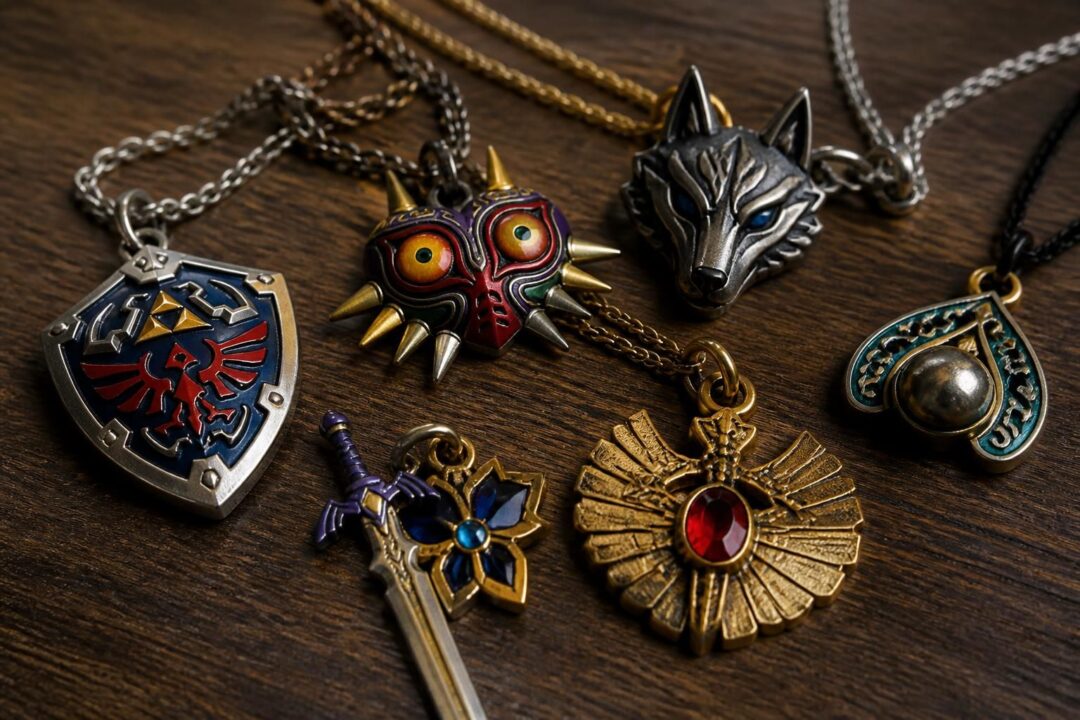
A strong curation favors range: mainstream icons for instant recognition, and deep cuts for the collectors who enjoy a knowing nod. That is why the most satisfying set mixes clean logo pendants, creature companions, and artifact-like shapes that feel pulled from a chest in a dungeon. Moreover, variety in color and surface finish helps each necklace earn its own personality.
One reliable lane comes from stainless steel pendant chains that keep a consistent format. Many fan-made catalogs use a 60 cm chain because it sits lower on the chest and works over a T-shirt. Consequently, it fits a broad set of body types and styling preferences. In that format, pendants inspired by classic consoles, mascot creatures, or minimal logos can become a uniform “daily rotation” rather than a special-occasion item.
Spotlight: logo pendants that avoid looking like merch
Logo pieces can feel too literal, yet the best ones use scale and finish to keep things tasteful. For instance, a small 1-inch pendant with a clean outline can read like modern design jewelry. On the other hand, oversized logos can clash with formal outfits. Therefore, the sweet spot tends to be compact, with a strong silhouette and enough negative space to breathe.
Fan catalogs also reveal a useful shopping cue: when a shop offers both a “small” and regular version, it signals design intent. That kind of sizing option usually comes from makers who test wearability. As a result, the buyer gets control over vibe, from subtle to statement.
Spotlight: Nintendo-era nostalgia and character charms
Console-era pendants tap a specific emotion. A GameCube-era logo charm, for example, can trigger memories of local multiplayer and late-night unlocks. Meanwhile, character-adjacent icons like a Chao-inspired enamel pendant hit a different tone. They feel playful, yet they still stay wearable because the shapes remain simple. Likewise, a Kirby-themed charm often works because it leans into round, friendly geometry.
These pieces also fit gifting well. If the recipient loves a specific era, a nostalgic icon becomes a precise signal of attention. Therefore, those picks often outperform generic controller necklaces when the goal is meaningful gamer gifts.
Spotlight: premium artisan pendants and custom work
Premium makers increasingly offer mid-to-high price ranges for more complex builds. Pieces such as Blue Wayfinder (around €95 to €140) and Forever Fruit (around €84 to €90) suggest a different tier. They usually imply thicker metal, careful polish, and tighter quality control. Moreover, those prices often include design time, not just materials.
Custom requests have also become a core service for many workshops. Some studios explicitly invite buyers to submit designs, then they fabricate the concept in-house, sometimes from a Barcelona-based bench. Consequently, an original sketch can become a one-off pendant that still feels aligned with video game aesthetics. That option matters for fan communities that value rare symbols, guild marks, or personal “loadout” iconography. The closing insight is simple: customization turns fan art into wearable identity.
How to Buy Geek Necklaces Online in 2026: Fit, Authenticity, and Smart Signals
Buying a geek necklace online often feels easy until the package arrives. Scale surprises, chain quality issues, and unclear return rules can turn excitement into regret. Therefore, a smart approach treats the purchase like real jewelry shopping, not impulse merch browsing. The good news is that a few checks reduce almost every risk.
Fit checks that prevent “looks great, wears badly”
Start with chain length. A 60 cm chain wears longer than many standard necklaces, which can flatter layered outfits. However, it may swing more during walking. Consequently, buyers who prefer stability should look for adjustable lengths or thicker links. Clasp design matters, too. A lobster clasp typically beats a cheap spring ring for daily wear.
Pendant weight and bail size also deserve attention. If the bail is too small, the pendant may not sit flat. Likewise, a heavy charm on a thin chain can cause kinks. The quick solution is simple: match heavy pendants with sturdier chains, or choose a smaller version if available.
Authenticity, licensing, and respectful fan work
Fandom jewelry lives in a complex zone. Official merch exists, and so do independent interpretations. However, the best fan-crafted scene tends to thrive when makers present designs as inspired creations rather than counterfeit logos. As a result, many reputable shops label items as “fan-made” and focus on original compositions.
For buyers, the goal is not legal research. It is clarity and ethics. If a listing uses official art assets without change, it raises a red flag. On the other hand, a pendant that reimagines a symbol with new line work and distinct proportions often signals real creative labor.
Practical trust signals: policies, photos, and communication
Clear returns and exchanges policies reduce anxiety, especially for gifts. Moreover, shipping notes that mention regional storefronts or worldwide fulfillment show that the seller has handled logistics before. Photos should include multiple angles, close-ups of enamel borders, and a size reference. Consequently, listings that show only one render deserve caution.
Finally, communication speed matters. A quick answer about chain material or pendant thickness signals good operations. That responsiveness often predicts how smoothly an order will go, which is an underrated part of nerd accessories collecting.
Styling Gaming Jewelry: Turning Pop Culture References Into Everyday Geek Fashion
Wearing gaming jewelry well means choosing context. A bright enamel charm can anchor a simple outfit, while a polished silver relic pendant can blend into business casual. Therefore, styling becomes less about loudness and more about placement, contrast, and restraint. The best look usually reads as “good accessory” first, and “oh, that reference!” second.
Everyday layering without visual noise
Layering works when each chain has a distinct length. For instance, a shorter chain can carry a tiny symbol, while a longer chain holds the main pendant. However, mixing too many focal points creates clutter. Consequently, many collectors stick to one statement charm and one subtle accent.
Metal mixing can also help. Stainless steel pairs well with streetwear staples, while sterling silver complements textured knits and denim. Moreover, gold accents can elevate a minimalist crest into something that feels like modern jewelry rather than a collectible.
Office-friendly “deep cut” choices
Work settings often reward subtlety. That is where deep-cut symbols shine: a rune-like mark, a simple cube logo, or a fruit charm that reads as design before fandom. As a result, the wearer keeps the reference close without turning the necklace into a conversation they did not ask for. If a colleague recognizes it, the moment feels earned.
Even so, comfort remains central. A pendant with sharp corners can catch on sweaters. Therefore, rounded edges and smooth enamel borders matter more than many buyers expect. That small detail can decide whether a necklace becomes daily gear or stays a display item.
Convention and stream-ready picks
For conventions, readability wins. A bold enamel character icon or nostalgic console symbol photographs well and sparks quick connections. Likewise, streamers often choose pieces that read clearly on camera. Consequently, high-contrast designs with simple shapes outperform intricate engravings in webcam lighting.
One last point ties everything together: the best fan-crafted necklaces succeed because they treat fandom as design, not costume. That mindset turns pop culture into a lasting accessory choice.
What makes a fan-crafted geek necklace better than mass-produced merch?
Fan-crafted pieces often focus on finish, wearability, and accurate proportions. Moreover, makers tend to offer better detail in enamel borders, cleaner edges, and clearer material disclosures, which improves comfort and longevity.
Is a 60 cm chain length good for video game-inspired necklaces?
A 60 cm chain usually sits lower and layers well over T-shirts and hoodies. However, it can swing more, so buyers who prefer stability should consider adjustable chains or thicker links, especially for heavier pendants.
How can a buyer check if gaming jewelry is skin-safe?
Look for explicit statements such as stainless steel grade, sterling silver purity, or nickel-free claims. In addition, check whether plating is used and ask the seller directly if the listing lacks detail.
What are smart gamer gifts if the recipient likes video games but not loud fandom merch?
Choose subtle icons: a small logo pendant, a crest-like emblem, or an artifact-style charm in silver or steel. Therefore, the necklace reads as stylish jewelry first, while still carrying a clear fan signal for those who recognize it.

Sylvain, 49, passionate editor-in-chief and curator specializing in geek culture and video game collectibles. Dedicated to uncovering and sharing the stories behind the most iconic and rare treasures in the gaming world.