
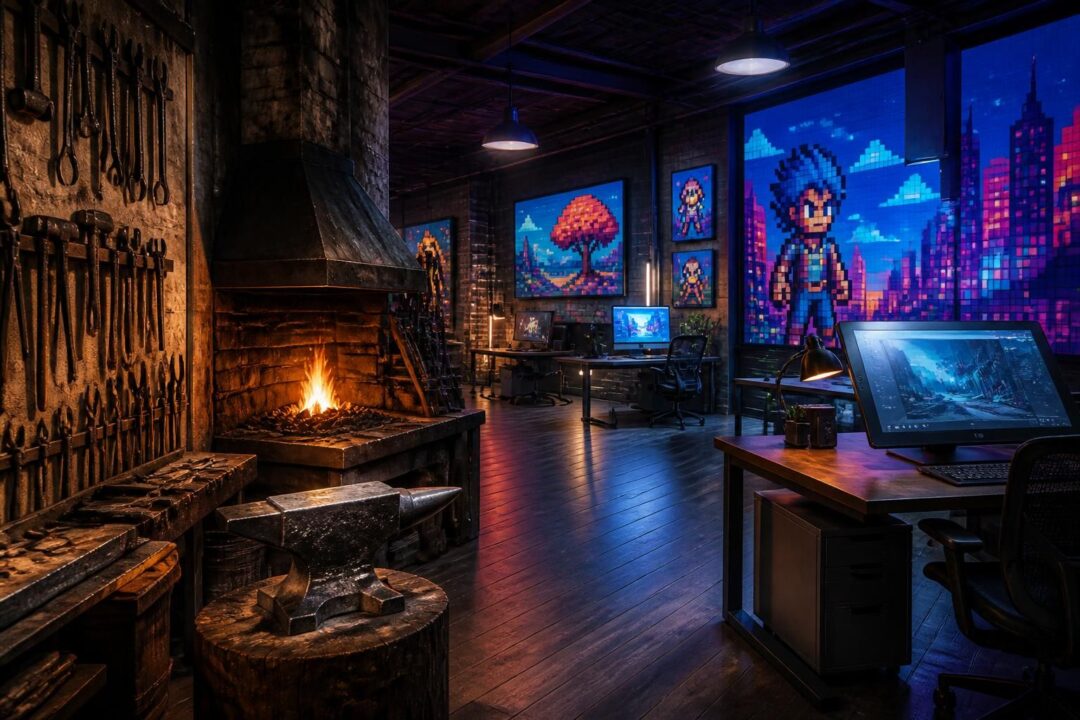
- Pixel Smithy began as a tightly focused Shop culture: small-batch, fandom-forward objects designed to feel personal.
- As the storefront era ended, the brand energy shifted toward a Magazine mindset: curated stories, guides, and scene mapping.
- The new editorial lane connects Gaming, Retro aesthetics, and Technology with hands-on maker knowledge.
- Digital Art and Pixel Art become the shared language, bridging collectors, creators, and casual fans.
- The future hinges on trust: clear sourcing, fair credit, and community-first Creativity that still sells without feeling like ads.
The Pixel Smithy sits at a familiar crossroads in geek retail: the moment when a beloved Shop stops being a place to buy and starts becoming a place to belong. In the 2010s, boutique fan-commerce matured fast, powered by social platforms, short product cycles, and the rising prestige of well-made collectibles. Yet the same forces that helped small retailers grow also raised the bar for logistics, customer support, and constant novelty. When a storefront closes, the usual story centers on scarcity and nostalgia. However, this pivot invites a more interesting question: what happens when a retail identity turns into an editorial voice?
The answer matters because Gaming culture now treats objects and stories as a single ecosystem. A pin, a charm, a zine, and a YouTube breakdown can all carry the same emotional charge. Consequently, “The Pixel Smithy” can evolve from selling fandom to documenting it. That shift does not erase commerce; it reframes it. Moreover, the emerging Magazine path promises something that algorithms rarely deliver: consistent taste, context, and craft knowledge. For readers who love Pixel Art, Digital Art, and Retro design, the next chapter can feel like a workshop, a gallery, and a field guide at once.
The Pixel Smithy Shop Era: Boutique Retail, Fandom Craft, and Collector Trust
From Chicago retailer to recognizable fandom label
The Pixel Smithy built recognition as a Chicago-based retailer that launched in 2012. The brand spoke in the language of modern collecting: clean product photos, tight theming, and drops that felt designed rather than mass-produced. Therefore, customers did not just “buy a thing.” They bought into a specific promise: polished, wearable, display-friendly objects that still winked at Gaming history.
That identity worked because it balanced two needs that rarely align. On one hand, fans want clear references. On the other hand, many collectors also want everyday elegance. Consequently, the Shop’s positioning landed between costume and luxury, which widened the buyer base. A Zelda-inspired silhouette could read as jewelry first, fandom second, and that ordering mattered.
What “quality” meant in a collectibles-first market
In boutique retail, “quality” has to show up in more than materials. It also appears in packaging, shipping reliability, and customer communication. Moreover, the Shop era thrived when a small team could keep that whole chain coherent. When those operations strain, even great design cannot fix the experience.
Collectors often treat a favorite store like a personal curator. However, curation creates expectations: consistent restocks, clear timelines, and predictable customer care. When a store announces a closing sale, the emotional reaction often looks like panic buying. Yet underneath that urgency sits a deeper fear: “Will this taste disappear?” That fear turns a closure into a cultural event.
The closing signal: what fans read between the lines
Public signals around the brand eventually stated that the store had closed. For followers, that kind of announcement reads like a curtain drop. Nevertheless, it also encourages a second life: archives, screenshots, resale listings, and memory threads. In fan culture, scarcity does not end a product’s story; it often multiplies it.
Consider a familiar scene: a longtime customer scrolls an old product grid, then searches the name on resale sites. As a result, the buyer learns the hard way that the object now carries “aftermarket meaning.” The item becomes proof of being there. That dynamic, while bittersweet, also shows why the editorial transformation can work. A Magazine can preserve and contextualize what the Shop made people feel.
From Shop to Magazine: Building an Editorial Engine for Gaming, Digital Art, and Maker Culture
Why a magazine model fits the moment
A Shop competes on inventory, price, and shipping speed. A Magazine, by contrast, competes on voice, selection, and clarity. Therefore, a shift toward publishing can reduce dependence on constant product churn. It can also reward the expertise that fans already assumed existed behind the storefront.
Even though social feeds still drive discovery, they often flatten context into captions. A magazine format restores depth. Moreover, it can turn a single product category into a broader “how and why.” For example, a feature on enamel pins can expand into plating methods, color separations, and the history of pin trading at conventions. That shift transforms consumption into literacy.
Editorial pillars that keep the brand coherent
To avoid feeling like a blog with ads, the Magazine needs clear pillars. Each pillar should answer a reader need, not just a branding need. Consequently, the publication can carry the Shop’s taste forward without repeating its business constraints.
- Craft & Process: practical explainers on production, from screen printing to resin casting, plus what quality control looks like.
- Scene Reports: convention micro-histories, artist alley spotlights, and regional maker communities tied to Gaming culture.
- Digital Art Studio: workflows for Digital Art and Pixel Art, including palette strategies and exporting for print.
- Retro Readings: essays that connect Retro aesthetics to modern design, including hardware constraints and nostalgia cycles.
- Technology Desk: tools, tablets, software updates, and archiving practices that help creators preserve work long-term.
With pillars like these, a reader can predict value. That predictability, in turn, creates trust.
A continuing character: “The Weekend Maker”
A useful thread for the magazine is a recurring persona: the Weekend Maker. This fictional reader works a full-time job, then carves out Saturday hours to draw sprites, prototype charms, or learn Blender. Therefore, every guide can speak to realistic constraints: limited budget, limited time, and big ambition.
When an article shows the Weekend Maker choosing between a budget tablet and a refurbished iPad, the advice becomes grounded. Likewise, a feature on color palettes gains urgency when it helps someone finish a small game jam asset pack. The magazine becomes a coach, not a billboard, and that stance keeps the transformation credible.
With an editorial engine in place, the next challenge becomes evidence: readers will want specifics, comparisons, and usable frameworks, not just vibes.
Pixel Art and Digital Art as the Magazine’s Core Language: Techniques, Tools, and Retro DNA
Pixel as constraint, pixel as identity
A single Pixel carries a paradox. It is tiny, yet it defines an entire aesthetic universe. Consequently, Pixel Art remains a perfect editorial anchor: it connects classic Gaming hardware limits to modern design choices. Even though screens now push high resolution, artists still chase the look of deliberate limitation.
That limitation can become a teaching tool. For instance, a magazine article can demonstrate how a 16-color palette forces strong silhouettes. Moreover, it can show how dithering creates the illusion of gradients. Those skills translate into icon design, embroidery patterns, and even jewelry engraving guides.
Practical workflows readers can use this week
Technique content needs to feel immediately actionable. Therefore, the magazine should publish repeatable recipes, not vague inspiration. A strong example: a three-step pipeline for creating sprite sheets that also print well as stickers.
- Design at 1x first: sketch the sprite at the target size, then lock the palette before adding effects.
- Stress-test on real backgrounds: place the sprite over dark, mid, and light scenes to catch readability problems.
- Export with purpose: save a crisp PNG for screens, then upscale with nearest-neighbor for print mockups.
Moreover, each workflow can include a failure mode. If banding appears, the guide can show how to shift hue, not just add more shades. That level of detail builds confidence.
Tools and Technology without brand worship
Creators often ask what software “wins.” However, most readers need to know what fits their constraints. Consequently, the magazine can compare tools based on task, not hype. A pixel editor, a general illustration program, and a 3D suite each solve different problems.
In addition, Technology coverage should explain trade-offs in plain language. A higher refresh rate helps drawing feel smoother, yet it will not fix poor ergonomics. Likewise, a color-accurate display matters for print, but it will not replace good palette discipline. The point is to make readers smarter buyers, whether they shop from big-box stores or local creators.
| Creative Goal | Best-Fit Tool Type | What to Watch For | Why It Matters for Retro-leaning Work |
|---|---|---|---|
| Sprite animation | Dedicated pixel editor | Onion-skin, palette locking, timeline controls | Stable palettes preserve the Retro feel across frames |
| Poster or zine layout | Layout and vector tools | Export presets, bleed settings, font licensing | Print rules keep Pixel Art crisp instead of blurry |
| Merch mockups | 3D + image editor combo | Lighting consistency, texture resolution, file sizes | Mockups sell the object without misrepresenting detail |
| Social previews | Mobile-friendly editor | Compression artifacts, platform cropping | Clean edges protect the “pixel grid” identity |
As readers gain technique, they also want culture. That demand sets up the next section: how the magazine can report on the scene without turning it into a museum.
Curating the Scene in 2026: Gaming Collectibles, Community Platforms, and Sustainable Creativity
Community platforms as both amplifier and stress test
Platforms like Tumblr and Instagram trained audiences to browse taste at high speed. Therefore, a modern Magazine must assume that readers arrive with context fragments, not full stories. The editorial job becomes connecting fragments into a reliable narrative.
However, platforms also reward urgency. “Last chance” posts, closing announcements, and limited drops spread fast because they trigger fear of missing out. Consequently, the magazine can offer an alternative rhythm: slower features, updated directories, and durable guides that remain useful after the hype fades.
Ethics and sourcing: the unglamorous backbone
Collectibles culture now demands transparency. Readers want to know who designed a motif, who manufactured the object, and what “official” even means. Moreover, Gaming fandom includes a long history of unlicensed merch. That reality does not vanish, so coverage needs to be precise.
A practical editorial policy can help. For example, product spotlights can label items as licensed, fan-made, or inspired-by, with clear credit lines. Likewise, the magazine can explain common licensing structures in plain terms. When readers understand the rules, they can support artists without confusion.
A sustainable business model that still feels fun
A magazine can monetize without turning every page into a storefront. Nevertheless, it has to pay creators. Therefore, mixed revenue works best: subscriptions, carefully separated sponsorships, affiliate links disclosed in-line, and limited collaboration drops that feel earned.
One smart tactic involves “workshop commerce.” Instead of pushing a random product, the magazine can run a seasonal series. For instance, a four-week Pixel design challenge can end with a small print anthology. That anthology becomes the product, while the series becomes the value. As a result, readers experience buying as participation, not extraction.
How the Shop legacy can power the Magazine future
The Shop era created a catalog of motifs and an audience trained to notice detail. Consequently, the magazine can treat that history as an archive, not a relic. A recurring feature could revisit a past design and unpack its influences, from 8-bit dungeon tiles to handheld UI icons. That approach turns nostalgia into education.
At the same time, the magazine can broaden beyond any single brand. When it spotlights other makers, it signals confidence. Moreover, it positions The Pixel Smithy as a hub, not a gate. That hub mentality is what keeps Creativity alive after the checkout button disappears.
What made The Pixel Smithy Shop stand out in the gaming collectibles space?
It combined fandom clarity with wearable design discipline. Moreover, it treated quality as a full experience, including presentation and reliability, not only materials.
How can a magazine replace what a shop used to provide?
A shop delivers objects, while a magazine delivers context. Therefore, the new model can preserve taste through curation, practical guides, and scene reporting that helps readers discover creators and learn skills.
Why center Pixel Art and Digital Art in the publication?
Pixel Art offers a shared vocabulary across Gaming, Retro design, and modern creation tools. In addition, Digital Art workflows translate directly into print, merch, and community projects that collectors already value.
What should readers look for in trustworthy collectibles coverage?
Clear credit, sourcing labels such as licensed versus fan-made, and transparent monetization practices. Consequently, readers can support creators with fewer surprises and better expectations.
How can creators with limited time benefit from this kind of magazine?
A consistent set of workflows, tool comparisons based on real constraints, and recurring challenges can guide weekend projects. As a result, creators can finish work, build a portfolio, and participate in community releases.

Sylvain, 49, passionate editor-in-chief and curator specializing in geek culture and video game collectibles. Dedicated to uncovering and sharing the stories behind the most iconic and rare treasures in the gaming world.